
Budweiser Marketing Strategy (2025)
The Budweiser Marketing Strategy is built on heritage, emotional resonance, and bold brand storytelling, making it one of the most recognizable beer brands worldwide. Leveraging iconic imagery such as the Clydesdale horses, patriotic themes, and memorable Super Bowl ads, Budweiser blends tradition with modern relevance to stay top-of-mind with consumers.
Founded in 1876 by Adolphus Busch, Budweiser quickly became a pioneer in large-scale brewing and brand-building. Over the decades, it has evolved from a domestic favorite to a global symbol of American beer culture, now available in over 80 countries. Its strategic mix of sponsorships, experiential marketing, and creative advertising has positioned Budweiser as more than just a beverage — it’s a cultural touchstone.
What sets Budweiser apart is its ability to adapt its image to different eras without losing its core identity. While it honors its roots through heritage-focused campaigns, it also embraces modern marketing tools like influencer partnerships, social media storytelling, and cause-driven initiatives. This balance allows Budweiser to connect with both loyal, long-time drinkers and younger audiences seeking authentic, share-worthy brand experiences.
By tapping into universal emotions — pride, friendship, and celebration — Budweiser transcends the beer aisle, embedding itself in moments that matter most to consumers. In doing so, it remains a leading example of how a century-old brand can stay relevant in an ever-changing market.
Budweiser Goals and Objectives
Budweiser’s marketing objectives focus on sustaining its legacy while expanding its relevance in modern drinking culture. These goals ensure it remains competitive in an evolving beverage industry dominated by craft beers, hard seltzers, and health-conscious alternatives.
1. Strengthen Global Brand Presence
Budweiser aims to reinforce its status as a leading international beer by expanding market penetration in Asia, Latin America, and emerging economies. For instance, targeted promotions during soccer tournaments have helped Budweiser connect with global sports audiences.
2. Drive Consumer Engagement
From interactive social media campaigns to immersive event experiences like Budweiser’s “Made in America” music festival, the brand creates touchpoints that encourage active participation and emotional connection.
3. Champion Cultural Relevance
Budweiser ties its campaigns to timely cultural moments — from patriotic Fourth of July promotions to partnerships with global sporting events — ensuring the brand stays woven into public conversations.
4. Innovate Product Offerings
The brand experiments with packaging, flavors, and limited-edition releases to attract younger drinkers and meet evolving tastes. Examples include special can designs during the FIFA World Cup or eco-friendly packaging trials.
5. Promote Responsible Drinking
Budweiser invests in campaigns encouraging moderation, such as “Drink Wiser,” aligning its brand with socially responsible values while building trust among consumers.
6. Leverage Digital Transformation
Budweiser uses data-driven marketing and e-commerce integrations to reach consumers where they shop and engage online, especially in mobile-first markets.
These objectives position Budweiser as a beer that’s not only steeped in tradition but also forward-looking, capable of thriving in both established and emerging markets.
Who is Budweiser’s Target Audience?
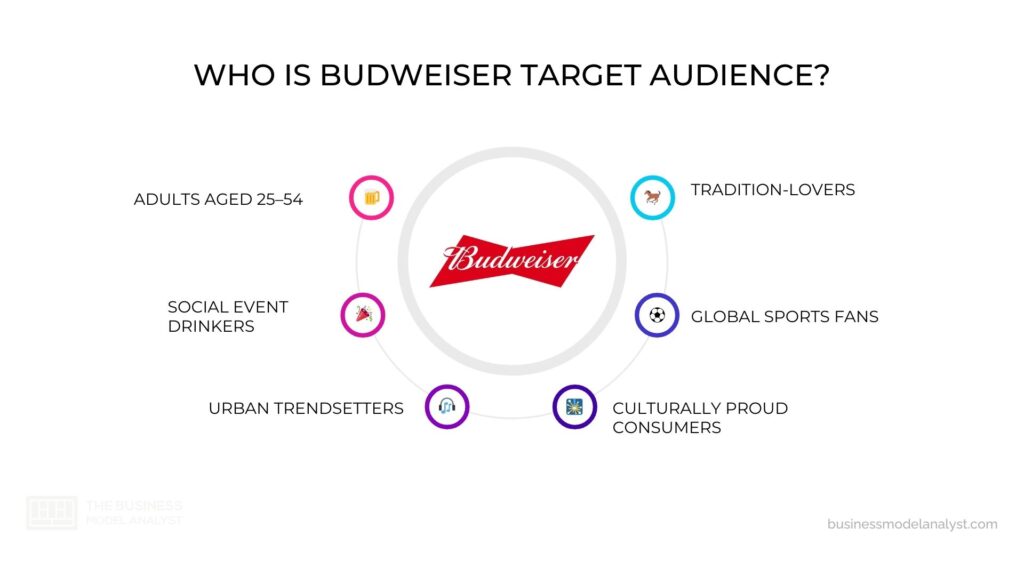
Budweiser’s target audience spans multiple demographics, psychographics, and geographies, enabling it to maintain a broad yet defined market presence. The brand appeals to both traditional beer drinkers and younger consumers seeking cultural connection.
Budweiser Demographics
Budweiser’s core demographic includes adults aged 25–54, with a near-even gender split but a slightly higher male skew. Income levels range from working-class to upper-middle-class, reflecting Budweiser’s accessible pricing and mass-market appeal.
Budweiser Psychographics
Psychographically, Budweiser resonates with individuals who value tradition, social connection, and shared experiences. Its marketing often speaks to those who appreciate authenticity, patriotism, and iconic Americana, while also engaging younger, urban trendsetters through music, sports, and festival sponsorships.
Budweiser Geography
Budweiser’s reach is global, with strongholds in North America, Europe, Asia, and South America. It adapts campaigns for local cultures — for example, embracing football (soccer) imagery in Latin America and Europe while leaning into baseball and American heritage themes in the U.S.
Budweiser Behavior
Budweiser consumers often purchase for social occasions — barbecues, sports events, concerts, and holidays. Many are loyal repeat buyers, but the brand also attracts casual drinkers during high-profile events like the FIFA World Cup or Super Bowl. Its consistent sponsorships make Budweiser top-of-mind for celebratory moments.
By tailoring its messaging to these segments — from nostalgic, heritage-focused ads for long-time drinkers to high-energy festival content for younger audiences — Budweiser maintains a wide yet emotionally connected customer base.
Marketing Mix of Budweiser
Budweiser Product
Budweiser’s flagship product is its classic American-style lager, known for its smooth taste and iconic red-and-white branding. Beyond the core beer, the brand offers variants like Budweiser Zero (alcohol-free), Bud Light, and seasonal editions. Limited-edition packaging — such as commemorative cans for the Olympics or FIFA World Cup — keeps the product fresh and collectible.
Budweiser Price
Budweiser follows a competitive pricing strategy that balances affordability with brand prestige. Positioned as a premium mass-market beer, it’s priced slightly higher than budget brands but accessible enough for everyday consumption. Special editions or premium collaborations sometimes command higher prices, appealing to collectors and enthusiasts.
Budweiser Place
Budweiser’s distribution spans bars, restaurants, supermarkets, convenience stores, and e-commerce platforms. Global partnerships with major retailers ensure broad availability, while sponsorship-driven sales points — like pop-up bars at music festivals or sports arenas — enhance brand visibility in high-traffic, high-energy settings.
Budweiser Promotion
Budweiser’s promotional strategy blends heritage storytelling with modern, experiential marketing. Iconic Super Bowl commercials, the Clydesdale horse campaigns, and patriotic messaging reinforce its legacy. On digital platforms, Budweiser leverages influencer collaborations, user-generated content, and event sponsorships to engage younger audiences. Major sports partnerships, including FIFA and NBA deals, keep Budweiser front-and-center during globally watched events.
By balancing product consistency with innovative campaigns, Budweiser’s marketing mix ensures it remains relevant, widely available, and emotionally resonant with its diverse customer base.
What are Budweiser’s Strategies?

1. Heritage-Driven Storytelling
Budweiser consistently draws on its 140+ year history, using themes of tradition, craftsmanship, and Americana. Campaigns featuring the Clydesdales or “This Bud’s for You” reinforce brand heritage while building trust and familiarity.
2. Event and Sports Sponsorships
From being the official beer of the FIFA World Cup to long-standing partnerships with MLB and NBA, Budweiser embeds itself in moments of celebration. These sponsorships create visibility and associate the brand with shared cultural experiences.
3. Emotional Brand Positioning
Budweiser ties its identity to feelings of pride, friendship, and unity. Ads often depict social gatherings, national pride, or heartfelt moments, making the brand feel personal and emotionally relatable.
4. Digital Engagement and Influencer Marketing
Through social media storytelling, interactive polls, and collaborations with musicians and lifestyle influencers, Budweiser connects with younger audiences who value shareable, authentic content.
5. Product Diversification
Budweiser adapts to shifting consumer preferences by expanding into alcohol-free beers, limited-edition flavors, and eco-friendly packaging innovations, catering to both health-conscious and environmentally aware drinkers.
6. Cause-Related Marketing
The brand promotes responsible drinking with initiatives like “Drink Wiser” and environmental sustainability campaigns, aligning itself with socially responsible values to strengthen brand trust.
By integrating these strategies, Budweiser sustains its cultural relevance while reinforcing its position as a global leader in the beer market.
Budweiser Channels
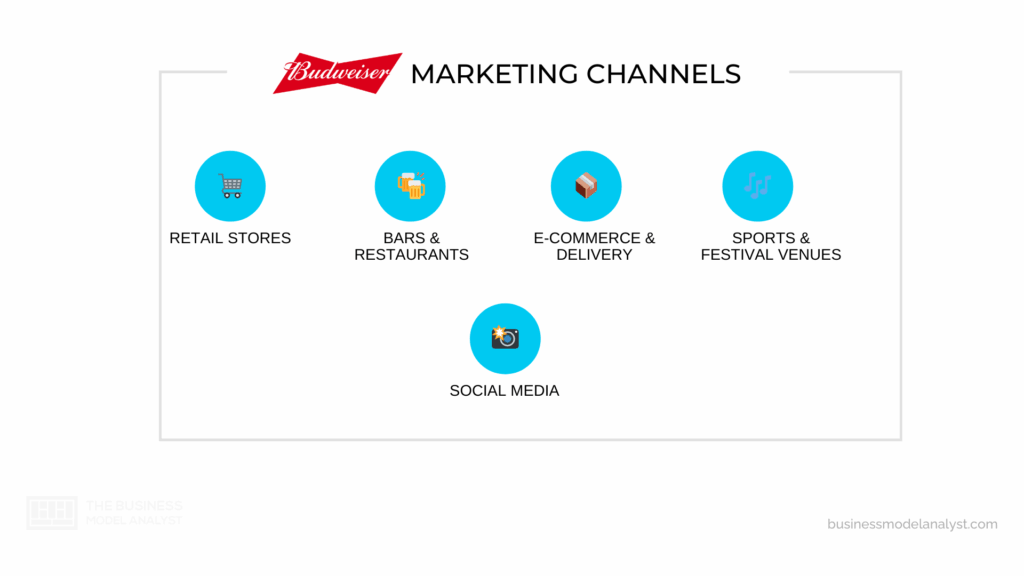
Budweiser uses a mix of traditional, digital, and experiential channels to maintain global visibility and engagement.
Retail Outlets
Supermarkets, liquor stores, and convenience shops form Budweiser’s core sales network. Strategic in-store displays, seasonal packaging, and bundle offers help drive impulse purchases.
Bars and Restaurants
On-premise sales remain a major channel, with Budweiser leveraging branded glassware, signage, and exclusive pouring rights in select venues to strengthen presence in social drinking spaces.
E-Commerce Platforms
Budweiser partners with online retailers and alcohol delivery services like Drizly, as well as offering direct-to-consumer ordering in select regions. Digital promotions encourage repeat purchases from home.
Sports and Event Venues
Large-scale sponsorships ensure Budweiser is poured and promoted at stadiums, festivals, and concerts. Branded booths, pop-up bars, and interactive fan zones amplify the experience.
Social Media and Digital Content
Platforms like Instagram, TikTok, and YouTube allow Budweiser to share high-impact visuals, behind-the-scenes event content, and influencer collaborations, extending its cultural reach.
Traditional Media
Television ads, especially during major events like the Super Bowl, reinforce brand identity. Outdoor advertising and print placements in lifestyle magazines support mass-market appeal.
By integrating these channels, Budweiser reaches consumers across multiple touchpoints — from the store shelf to their social media feed — creating a consistent and immersive brand presence.
How to Apply Budweiser Strategies to Your Business
1. Build a Strong Brand Story
Like Budweiser’s heritage-driven storytelling, craft a narrative that reflects your origins, values, and purpose. Share it consistently across channels to build trust. Example: A local café highlighting its founders’ journey and coffee-sourcing story.
2. Leverage Event Marketing
Align your brand with experiences your audience values — from local fairs to industry expos. Even small-scale sponsorships can increase visibility and foster emotional connections.
3. Evoke Emotion in Messaging
Budweiser uses pride, friendship, and unity to resonate with consumers. Identify core emotions linked to your product and highlight them in campaigns to deepen engagement.
4. Expand Through Partnerships
Collaborate with complementary brands or organizations to tap into new audiences. A fitness brand, for example, could partner with a local smoothie bar for cross-promotions.
5. Diversify Your Product Offerings
Introduce limited editions, seasonal variations, or healthier alternatives to keep offerings fresh and attract different market segments.
6. Embrace Digital Engagement
Use social media storytelling, influencer collaborations, and interactive content to maintain relevance. Even small businesses can create behind-the-scenes videos or customer shoutouts to boost connection.
7. Align with Social Responsibility
Budweiser’s responsible drinking campaigns show that values matter. Support a cause relevant to your brand — sustainability, local charities, or community initiatives — to enhance brand image and loyalty.
Applying these tactics can help position your brand as memorable, relevant, and emotionally resonant, no matter your industry or size.
Conclusion
Budweiser’s marketing success lies in its ability to balance heritage with innovation. By honoring its roots through iconic imagery and consistent messaging, while embracing modern tactics like digital engagement, influencer partnerships, and cause-driven campaigns, Budweiser remains relevant across generations.
Its approach shows that strong branding is about more than product quality — it’s about cultural connection. Whether through emotional storytelling, major sports sponsorships, or socially responsible initiatives, Budweiser embeds itself into moments of celebration and unity, making it more than just a beverage brand.
For businesses, Budweiser’s strategy is a reminder that staying relevant requires both consistency and evolution. By knowing your audience, crafting a compelling brand story, and delivering value through meaningful experiences, you can achieve long-term loyalty and market leadership — just as Budweiser has for nearly 150 years.
link