Oklahoma casket sales law challenged by custom design business

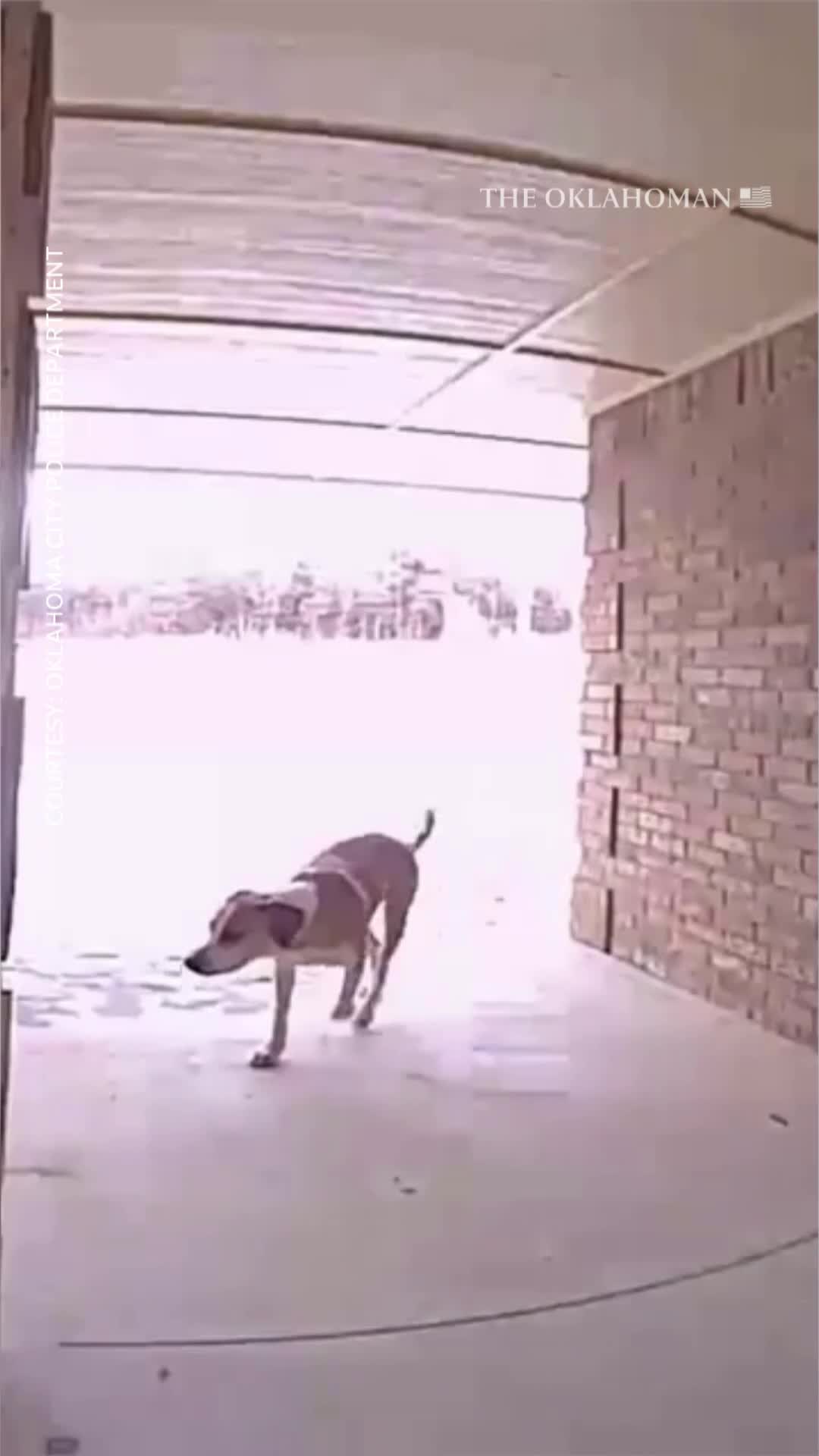

OKC camera footage catches two dogs stealing package from porch
A security camera caught a pair of pups in OKC helping themselves to a package from a home.
- An Oklahoma couple is suing the state over a law that prevents them from selling customized caskets directly to the public.
- Current Oklahoma law requires anyone selling caskets to be a licensed funeral director operating out of a funeral home.
- The business, Caskets of Honor, was fined after an undercover investigation by the Oklahoma Funeral Board.
- The couple’s attorneys argue the law is protectionist, harms consumers by driving up costs, and benefits only the funeral industry.
Since 2017, Candi Mentink and her husband, Todd Collard, have been personalizing caskets with vinyl wraps and customized interiors as part of their business, Caskets of Honor.
Under their business model, they buy caskets wholesale, then modify them at their workshop in Calvin, Oklahoma. They sell to customers across most of the United States, but they can’t sell them here.
That’s because Oklahoma bans direct casket sales unless you’re a licensed funeral director working at a funeral home. Mentink and Collard are now challenging the state laws that prevent them from opening their business directly to Oklahomans.
Their attorney, Matt Liles of the Institute for Justice, described the laws as protectionist and unfair for private businesses like Caskets of Honor.
“A casket is just a box. Oklahoma doesn’t regulate casket design or casket manufacturing. It doesn’t even require a casket for burial. An Oklahoman can be buried in a casket, a shroud, or literally nothing at all,” Liles said during a Feb. 5 news conference after filing the lawsuit. “But Oklahoma bans anyone other than a licensed funeral director from selling caskets to the public. Not because caskets threaten the public in any way, but solely to protect the private financial interests of the funeral industry.”
What does Oklahoma require for casket sales?
Under Oklahoma law, anyone selling a casket has to obtain a funeral director’s license, which itself requires years of education in how to preserve bodies. To meet the law’s requirements, they would also have to transform their shop into a funeral home.
The law isn’t new, nor is it unique. However, with the growth of online sales and other changes inside the funeral industry, these kinds of limits are now rare. Just two states — South Carolina and Virginia — have a similar law on the books.
It wasn’t until 2021 that Mentink and Collard realized their business model is against Oklahoma law. That year, they set up a booth at the Tulsa State Fair to promote their designs, but an undercover investigator with the Oklahoma Funeral Board posed as an interested customer, and ultimately determined they were trying to sell caskets to the public without having a funeral director’s license.
“Oklahoma’s licensing laws for casket sales don’t benefit anyone other than licensed funeral directors,” Liles said. “And they harm the public because they drive up the cost of caskets.”
Caskets of Honor eventually settled with the Oklahoma Funeral Board and paid $4,000 in fines, along with costs and attorney fees. They also had to stop selling caskets directly to Oklahomans, cease advertising as a direct retailer in Oklahoma and hang a sign on their shop warning customers that they cannot sell directly.
How have they gotten around this prohibition so far?
Caskets of Honor is now licensed as a business south of the Red River in Texas. Customers who do business with the company must go through the Texas corporation, which subcontracts with Mentink and Collard’s shop in southeastern Oklahoma. Their attorney described it in a court filing as a “legal Rube Goldberg machine.”
“Our goal is to get this changed not only for ourselves, but our fellow Oklahomans,” Mentink said. “It’s something that needs to change for the entire state. We need to be able to sell our caskets to our friends, our family, anyone in the state of Oklahoma, and not have to do it out of another state.”
The married couple have tried other ways to solve their problem, including fighting for legislation at the Oklahoma state Capitol. Those efforts have so far been unsuccessful.
“They come up with all kinds of lame things, like the bottom might fall out of it, but we use the same caskets they do,” Collard said, referring to the funeral industry. “We just put a wrap on them. It’s a pretty lame response from them.”
What to know about the lawsuit
The lawsuit filed in Oklahoma County District Court names the Oklahoma Funeral Board as a defendant. In a statement, Executive Director Tyler Stiles said the board itself has taken a neutral stance on previous legislative attempts to repeal the laws.
“The bill to allow anyone to sell caskets to the public seems similar to other states in the country. I have informed the author of the bill, and Caskets of Honor, numerous times that the Oklahoma Funeral Board is not fighting the bill,” Stiles said. “The current law’s background is to protect the consumer from overreaching sales tactics. As you could imagine, when losing a loved one, many individuals experience grief and possibly not think clearly when making decisions.”
Oklahoma’s ban on direct casket sales has been attacked in federal court, but that lawsuit failed to overturn the law, even after reaching the 10th Circuit Court of Appeals.
“The court, in that case, held that the U.S. Constitution doesn’t prohibit Oklahoma from banning who can sell caskets just to enrich licensed members of the funeral industry,” Liles said. “That was obviously controversial at the time, and still is. Most of the other federal courts who have reviewed cases like this disagree with that, but that means that people in Oklahoma now have less protection for their economic liberty than people in other states.”
In a written statement, the Oklahoma Funeral Directors Association said it has longstanding concerns regarding third-party casket sales by companies and individuals who are not licensed by the state.
“As a result, consumers are not afforded the same protections that apply when purchasing funeral merchandise through a licensed funeral provider. Licensed funeral homes are subject to state oversight, professional standards, and disciplinary action — third-party sellers are not,” said association President Brandon Lee. “This lack of oversight creates significant risk for families. When issues arise — such as delayed delivery, improper sizing, damage, or misrepresentation — families often discover they have limited or no recourse. Funeral homes, despite having no involvement in the purchase, are frequently forced to manage these problems under urgent and emotional circumstances, sometimes at additional cost to the consumer.”
Lee also said the association believes that anyone selling funeral merchandise intended for immediate use should be subject to state oversight.
“Our position is not about limiting consumer choice, but about ensuring that all consumers — regardless of where they purchase funeral merchandise — are adequately protected,” he said.
link